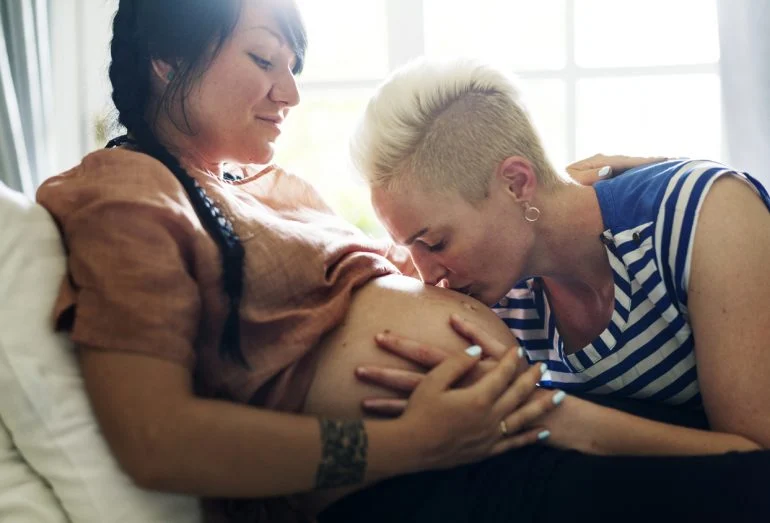
Picture this: you’re running a marathon, and someone tells you that you can’t have a snack or a sip of water for hours beforehand. While I haven’t tackled a marathon, I’ve been through labor—twice! If someone had dared to say I couldn’t eat while enduring contractions that felt like they might tear me apart, I would have given them an earful, for sure.
Despite the common sense of eating during such a demanding time, many hospitals in the U.S. still uphold a strict “no food or drink during labor” rule. Sure, ice chips galore, but solid food? Forget it.
When I gave birth with a midwife outside of a hospital, the restrictions didn’t apply. In fact, I was encouraged to eat! During the early phases of my first labor, when contractions felt like a slow drumbeat of agony, I relished a hot egg and cheese sandwich. During my second labor, a hearty bowl of cereal and milk was my comfort food of choice. Because let’s face it, when you’re facing the greatest challenge of your life, you need some comfort!
As labor intensified during my first experience, my midwife urged me to eat something, reminding me that I hadn’t had a bite in eight hours. But at that point, the thought of food made me feel queasy. Still, she insisted—even a little soup or juice would help. I managed to get down a few spoonfuls of soup before it all came back up. No biggie—my midwife was just glad I had tried to fuel up, and I soon found that second wind needed to welcome my son.
Fast-forward a few years, and I was there for my friend Jenna’s hospital birth. While her experience was equally valid and fulfilling, the glaring difference was her complete lack of food and drink. Watching her crunch ice chips while she craved a snack made me want to sneak her a granola bar!
Fortunately, the tide is turning. The American Society of Anesthesiologists (ASA) recommended in 2015 that women in labor should be allowed to eat and drink whenever possible. This is a significant shift, considering the longstanding “no food or drink” rule stemmed from fears of aspiration during anesthesia—a valid concern, but one that the ASA found to be largely unfounded.
After reviewing 385 studies since 1990, they found minimal risk associated with women eating during labor. In fact, they discovered that not allowing food and drink could actually lengthen labor. And no one wants that! Depriving laboring moms of nourishment not only drains energy but can also lead to emotional distress—adding even more stress to an already tough situation.
Of course, some high-risk women may need to avoid eating during labor, like those with eclampsia or preeclampsia. But for healthy, low-risk women, these outdated rules should be reconsidered. It’s essential for all laboring women to discuss their options with their healthcare providers to determine if eating and drinking is safe for them.
After chatting with friends who recently gave birth, it seems that only a handful of hospitals have started to adapt their policies based on this new guidance, while many still lag behind. Here’s hoping for a future where women can munch on a piece of toast or nibble a protein bar when they need it most. After all, when you’re doing the most physically demanding work of your life, you deserve a little fuel.
If you find yourself in a situation where food and drink are off the table during labor, but you believe you’re low-risk, consider printing out that ASA study and bringing it up at your next prenatal appointment. It couldn’t hurt to ask! And if you do get the green light to snack, cherish every bite—even if it eventually comes back up. Trust me, every calorie counts when you’re bringing a new life into the world.
For more insights on navigating the journey of pregnancy and labor, you can explore our other blog posts, including information on privacy policies. And for those interested in boosting fertility, check out Make a Mom’s guide. For a comprehensive overview of reproductive options, visit WebMD.
In summary, the notion of denying food and drink to women in labor is finally being challenged. With new recommendations from the ASA, it’s crucial for women to advocate for their needs during labor. Eating can provide essential energy and emotional support, making the experience less daunting and more empowering.