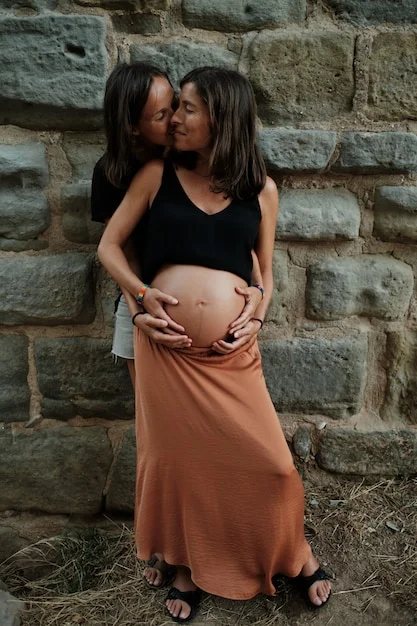
I once inhabited a world where all babies entered the world alive, where death was reserved for the elderly, and where grief had a definitive end. Then, on a bright Saturday morning in the summer of 2018, I gave birth to twin girls — one who lived and one who did not. My twin A passed away due to a mix of placental insufficiency, severe IUGR, and ultimately, an umbilical blood clot. She was born at just 24 weeks. Meanwhile, her twin, Baby B, weighed less than a pound and was barely clinging to life in the NICU, facing the same medical challenges. My husband and I were engulfed in shock, and with the uncertainty surrounding Baby B’s survival, we buried our grief deep within us. It wasn’t until nearly two years later, following an 8-month NICU stay and the eventual stabilization of our surviving daughter, that we began to truly confront the loss of A.
Medical terminology such as pregnancy loss, fetal demise, and miscarriage strips away the humanity from a profoundly human experience. Statistics show that around 25% of us have faced these devastating events, yet our stories often go unheard, our babies overlooked. These terms suggest blame on the mother while reducing the child’s existence to mere clinical jargon. As bereaved parents, we are often told to keep quiet about our children to avoid discomfort for others, or we feel ashamed for sharing such an intimate part of our lives — many prefer silence over mentioning their children’s names.
Since A’s passing, our conversations with family, friends, and even strangers have been filled with hollow platitudes. For almost a year, our surviving twin was gravely ill. Many around us expected our focus to solely be on her because “at least we have one.” I found myself dreading interactions where the fact that our living child is a twin might come up — not only was I grappling with my own sorrow, but I also had to anticipate how others would react.
Too often, I’ve been met with horrified looks when asked the painful question, “How many children do you have?” I respond honestly, “I have twin girls, Lily is two and her sister didn’t survive.” I wouldn’t expect you to leave out one of your children when answering, so why is it assumed that I should? A is just as much my child as her sister, and I am honored to remember her at every opportunity. These conversations can be emotionally draining; I wish for a world where I won’t receive a pained expression for acknowledging my baby.
When bereaved parents share details, stories, or photos of our children, we are revealing a piece of our hearts. It’s a privilege for you to know about them, and it’s presumptuous to judge our choices without having experienced our pain. When we open ourselves to you, here are some ways you can support us:
- Accept that you may not know what to say. Let us know you wish to help, but are unsure where to begin. We’re learning too, and it’s comforting to know you want to walk this path with us.
- Inquire about our language preferences. There are various ways to discuss infant loss, and no two bereaved parents have the same views. While some might prefer terms like “angel moms,” I identify as a “dead baby mom,” as I don’t find solace in spirituality. Yet, I’d much rather hear something that doesn’t align with my preferences than face silence — taking the time to ask shows you care.
- Speak our child’s name. Nothing brings me more comfort than hearing someone refer to my daughter by her name. When she’s mentioned on cards, in texts, or during conversations, I know you’re remembering her too.
As a society that often shies away from discussing death, it’s vital that we learn from those who have faced such heartache. My daughter’s passing has profoundly influenced my identity and my worldview — I refuse to hide her away or make her story easier for others to digest. Instead, I will say her name, share her story, and work toward breaking the stigma surrounding infant loss.
This article was originally published on Feb. 23, 2021.
For more insights, check out this post on another one of our blogs.
Summary:
In a heartfelt and poignant reflection, Emily Carter shares her experience of losing one of her twin daughters shortly after birth and the emotional toll of navigating grief in a society that often minimizes or ignores the realities of infant loss. She emphasizes the importance of recognizing and honoring her deceased child by acknowledging her existence and advocating for open conversations about loss. Emily urges others to support bereaved parents by being honest about their uncertainty, asking about language preferences, and speaking the names of lost children.