Blog Post Title: Charting Your Baby’s Growth: 24 Milestones to Measure
Summary:
As a parent, one of the most exciting and rewarding experiences is watching your baby grow and develop. From their first smile to their first steps, each milestone is a precious moment that you want to document and cherish forever. But with so many different milestones to track, it can be overwhelming to keep up with your baby’s growth and development. That’s why we’ve put together a comprehensive guide to help you chart your baby’s growth and monitor their progress. In this blog post, we will cover 24 key milestones that you can use to measure and track your baby’s growth, from birth to their first birthday.
1. Birth weight and length: The first milestone you’ll want to measure is your baby’s birth weight and length. This is usually done by the doctor or midwife at the hospital, but it’s still important to keep a record of it for future reference.
2. First smile: Around 6-8 weeks, most babies will start to smile in response to their parents’ faces. This is a major milestone as it shows that your baby is starting to recognize and interact with the world around them.
3. Rolling over: By 4-6 months, most babies will start to roll over from their back to their tummy and vice versa. This is a sign that their muscles are getting stronger and they are gaining more control over their body.
4. Sitting up: Around 6-8 months, your baby will start to sit up without support. This is a big milestone as it shows that their neck and back muscles have developed enough to support their body weight.
5. First words: Most babies will start to say their first words between 9-12 months. This could be simple words like “mama” or “dada” or even animal sounds. It’s an exciting milestone as it marks the beginning of your baby’s language development.
6. Crawling: Between 7-10 months, your baby will start to crawl. This is a major milestone as it allows them to explore their surroundings and become more independent.
7. Standing with support: By 9-12 months, your baby will start to pull themselves up to stand using furniture or your hands for support. This is a sign that their leg muscles are getting stronger and they are preparing for their first steps.
8. First steps: Around 12-15 months, most babies will take their first steps. This is a huge milestone and a moment that parents eagerly wait for. It’s important to remember that every baby develops at their own pace, so don’t worry if your baby takes a little longer to start walking.
9. Finger foods: Around 9-12 months, your baby will start to show interest in finger foods and will try to feed themselves. This is an important milestone as it marks the beginning of your baby’s transition to solid food.
10. Teething: Most babies will start teething between 4-7 months. This can be a difficult milestone for both parents and babies, but it’s a sign that your baby’s teeth are starting to come in.
11. First tooth: The first tooth usually appears around 6-10 months. This is an exciting milestone as it marks the beginning of your baby’s dental health journey.
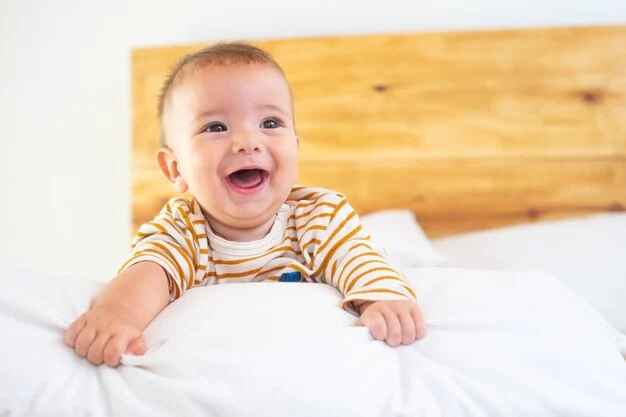
Charting Your Baby's Growth: 24 Milestones to Measure
12. Pincer grasp: Between 8-10 months, your baby will start to develop their pincer grasp, which is the ability to pick up small objects using their thumb and forefinger. This is an important milestone as it helps with their fine motor skills development.
13. Babbling: Around 6-9 months, your baby will start to babble and make different sounds. This is a sign that they are trying to communicate and their language skills are developing.
14. Object permanence: By 8-12 months, your baby will start to understand that objects still exist even when they can’t see them. This is an important cognitive milestone as it shows that your baby is developing a sense of object permanence.
15. Stranger anxiety: Around 6-9 months, your baby may start to show signs of stranger anxiety. This is a normal milestone as your baby becomes more aware of their surroundings and may become wary of unfamiliar people.
16. Social smiling: Between 3-6 months, your baby will start to smile at familiar faces and may even laugh. This is a key social milestone as it shows your baby is developing social skills and forming bonds with others.
17. Clapping: By 9-12 months, your baby will start to clap their hands. This is a fun milestone that shows your baby is developing their motor skills.
18. Pointing: Around 12-15 months, your baby will start to point at objects they want or are interested in. This is a sign of language development and their growing understanding of the world around them.
19. Playing peek-a-boo: Between 6-9 months, most babies will start to enjoy playing peek-a-boo. This is a classic game that helps with your baby’s cognitive and social development.
20. Stacking blocks: By 12-15 months, your baby will start to stack blocks on top of each other. This is an important milestone that shows their hand-eye coordination and problem-solving skills are developing.
21. Scribbling: Around 12-15 months, your baby will start to scribble with crayons or markers. This is a key milestone in their creative development.
22. Drinking from a cup: By 12-15 months, most babies will start to drink from a cup. This is a sign that they are becoming more independent and their motor skills are developing.
23. Walking backwards: Between 12-15 months, your baby will start to walk backwards. This is a fun milestone that shows their balance and coordination are improving.
24. First birthday: Last but not least, your baby’s first birthday is a major milestone to celebrate. It marks the end of their first year and the beginning of many more milestones to come.
In conclusion, tracking your baby’s growth and development is an important part of parenting. By keeping an eye on these 24 milestones, you can ensure that your baby is reaching key developmental stages and identify any potential delays. Remember, every baby is unique and may reach these milestones at different times, so don’t compare your baby to others. Embrace each milestone with joy and celebrate your baby’s growth and development along the way.