Exploring Syringe Insemination: An Alternative Route to Same-Sex Parenthood
In recent years, there has been a growing acceptance and support for same-sex couples and individuals to become parents. However, for those who are unable to conceive through traditional methods or unable to afford expensive fertility treatments, the journey to parenthood can be challenging. This is where syringe insemination, also known as self-insemination, comes into play as an alternative route to same-sex parenthood.
Syringe insemination involves the process of manually injecting semen into the vagina using a syringe, without the need for medical assistance or expensive procedures. While this method may seem simple, there are important considerations and steps to take to increase the chances of success. In this blog post, we will explore the ins and outs of syringe insemination and how it can be a viable option for same-sex couples and individuals looking to start a family.
The Basics of Syringe Insemination
Syringe insemination is a form of artificial insemination, where sperm is introduced into the cervix or uterus through a syringe, rather than through sexual intercourse. This method can be used in both heterosexual and same-sex relationships, and it is often a preferred choice for those who do not wish to use or cannot afford other fertility treatments.
The Process of Syringe Insemination
The first step in syringe insemination is to obtain semen from a sperm donor. This can be done through a sperm bank or by finding a known donor. It is essential to ensure that the donor has undergone proper medical screenings and testing to rule out any potential health issues or genetic disorders.
Next, the donor’s semen is collected and placed into a sterile cup or container. The recipient then uses a syringe without a needle to draw up the semen from the container. It is crucial to use a clean and sterile syringe to prevent any infections or complications.
The recipient then lies down with their legs elevated and inserts the syringe into the vagina, aiming towards the cervix. Slowly and gently, the semen is injected into the vagina, and the syringe is removed. It is recommended to stay in the same position for about 15 minutes to allow the sperm to reach the cervix.
Factors Affecting Success Rates
While syringe insemination may seem like a straightforward process, there are several factors that can affect its success rates. These include the timing of ovulation, the quality of the sperm, and the recipient’s overall fertility health.
Timing is crucial in syringe insemination as the sperm can only survive in the female reproductive tract for a limited amount of time. It is essential to track ovulation through methods such as ovulation predictor kits or basal body temperature charting to increase the chances of success.
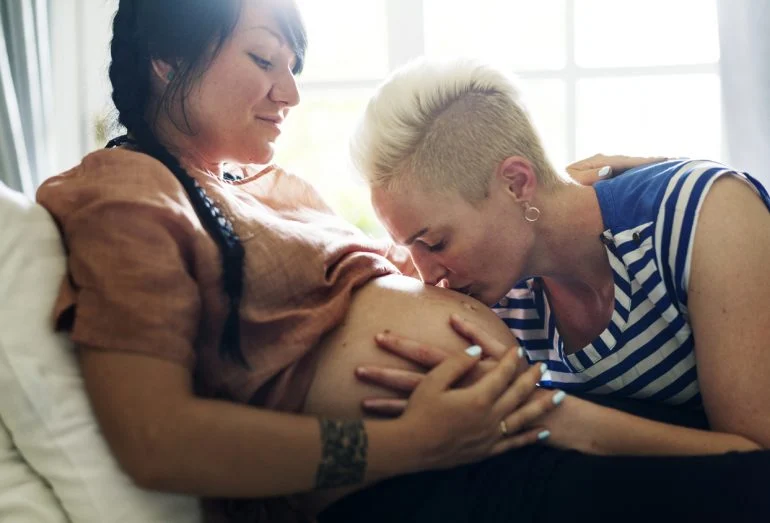
Exploring Syringe Insemination: An Alternative Route to Same-Sex Parenthood
The quality of the sperm is also a critical factor. It is recommended to use fresh semen rather than frozen, as fresh sperm tends to have higher mobility and a better chance of fertilization. However, if using frozen sperm, it is essential to follow the instructions for thawing and handling carefully.
Lastly, the recipient’s fertility health is also an important consideration. It is recommended to consult with a fertility specialist or a doctor to ensure that the reproductive system is healthy and functioning correctly.
The Legalities of Syringe Insemination
One of the essential things to consider when using syringe insemination is the legalities involved, particularly for same-sex couples. In some countries, the donor may have parental rights if the insemination is not done through a licensed medical professional. It is crucial to research and understand the laws and regulations in the specific location before proceeding with syringe insemination.
Benefits of Syringe Insemination
Syringe insemination offers several benefits, making it a popular choice for same-sex couples and individuals looking to become parents. Some of these benefits include:
1. Affordability: Compared to other fertility treatments, syringe insemination is a much more affordable option, making it accessible to a wider range of people.
2. Privacy: Syringe insemination can be done in the comfort and privacy of one’s home, without the need for medical professionals or clinics.
3. Control over the process: By using syringe insemination, individuals have more control over the process, from choosing the donor to the timing of insemination.
4. No medical interventions: As syringe insemination does not involve any medical procedures or interventions, it is a less invasive option for those who prefer a more natural approach.
5. Involvement of the donor: For same-sex couples, syringe insemination allows the donor to be involved in the process and have a biological connection to the child.
Conclusion
Syringe insemination is a viable alternative for same-sex couples and individuals to start a family. While it may not be suitable for everyone, it offers a more affordable, private, and natural option for those looking to conceive. With proper research, timing, and precautions, syringe insemination can be a successful method for same-sex parenthood.