Summary:
Tracking your baby’s progress is an exciting and important part of parenthood. From the moment they are born, babies are constantly growing and developing, reaching new milestones along the way. These milestones not only show us how far our little ones have come, but also give us an idea of what to expect next. In this blog post, we will take a look at 40 essential milestones for tracking your baby’s progress. From physical and cognitive development to social and emotional skills, we will cover it all.
Physical Milestones:
1. Lifting their head: By around 2-3 months, your baby should be able to hold their head up for short periods of time while on their tummy.
2. Rolling over: By 4-6 months, most babies will start rolling from their tummy to their back and vice versa.
3. Sitting up: Between 6-8 months, your baby may be able to sit up on their own.
4. Crawling: Around 7-10 months, your baby will start crawling, using their arms and legs to move around.
5. Pulling up: By 9-12 months, your baby may start pulling up on furniture and standing with support.
6. Walking: Between 12-18 months, most babies will take their first steps and begin walking independently.
Cognitive Milestones:
7. Recognizing faces: From birth, babies can recognize familiar faces, especially their parents.
8. Smiling: By 2 months, your baby will start smiling in response to your smiles and interactions.
9. Babbling: Around 6 months, your baby will start making babbling sounds, which is their way of practicing language.
10. Responding to their name: By 7-9 months, your baby should respond to their name when called.
11. Object permanence: Around 8-12 months, your baby will understand that objects still exist even when they can’t see them.
12. Pointing: Between 9-12 months, your baby will start pointing at objects to show what they want or to get your attention.
Social and Emotional Milestones:
13. Smiling and cooing: By 2-3 months, your baby will start smiling and making cooing sounds, which is their way of communicating and bonding with you.
14. Stranger anxiety: Around 6-9 months, your baby may become wary of unfamiliar faces and show fear or distress when separated from you.
15. Separation anxiety: Between 8-12 months, your baby may start getting upset when you leave them, as they have developed a strong attachment to you.
16. Playing games: By 9-12 months, your baby will start enjoying simple games like peek-a-boo and patty cake.
17. Mimicking: Around 12-18 months, your baby will start imitating your actions and words, showing their social and emotional development.
Language and Communication Milestones:
18. Crying: From birth, crying is your baby’s main form of communication to let you know when they are hungry, tired, or in need of a diaper change.
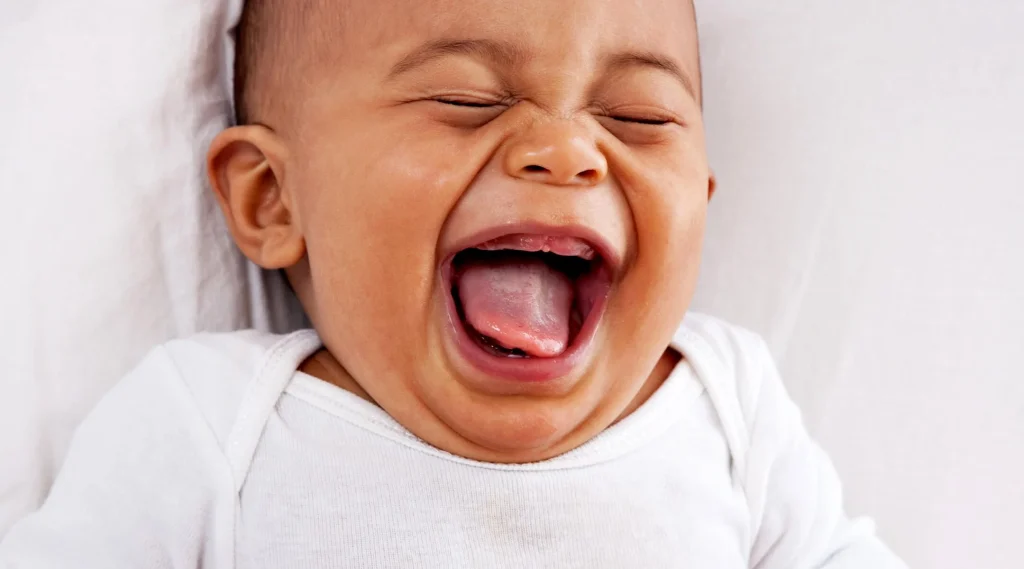
19. Laughing: By 4-6 months, your baby will start laughing, which is their way of expressing joy and happiness.
Tracking Your Baby's Progress: A Look at 40 Essential Milestones
20. First words: Between 10-14 months, most babies will say their first word, usually “mama” or “dada.”
21. Understanding simple instructions: Around 12-18 months, your baby will start understanding simple instructions like “come here” or “wave bye-bye.”
22. Using simple phrases: By 18-24 months, your baby will start using simple phrases like “thank you” or “more please.”
Gross and Fine Motor Skills Milestones:
23. Grasping objects: From birth, your baby will have a reflex to grasp onto objects.
24. Transferring objects: By 6-8 months, your baby will start transferring objects from one hand to the other.
25. Pincer grasp: Around 9-12 months, your baby will develop the pincer grasp, where they can pick up small objects using their thumb and forefinger.
26. Stacking blocks: By 12-18 months, your baby will start stacking blocks, developing their fine motor skills.
27. Scribbling: Between 18-24 months, your baby will start scribbling with crayons, developing their hand-eye coordination.
Self-Care Milestones:
28. Holding a bottle: By 6-9 months, your baby will start holding their own bottle during feeding.
29. Finger feeding: Around 9-12 months, your baby will start feeding themselves with their fingers.
30. Using a cup: By 12-18 months, your baby may start using a sippy cup to drink liquids.
31. Self-feeding with utensils: Between 18-24 months, your baby will start using utensils to feed themselves.
32. Helping with dressing: By 24-30 months, your toddler may start helping with dressing by putting on their own shirt or pants.
Sensory Milestones:
33. Tracking objects: From birth, babies can track moving objects with their eyes.
34. Reaching for objects: By 3-4 months, your baby will start reaching for objects that interest them.
35. Exploring objects: Between 6-9 months, your baby will start exploring objects by touching, shaking, and banging them.
36. Responding to music: Around 9-12 months, your baby will start responding to music by dancing or clapping.
37. Playing with textures: By 12-18 months, your baby will enjoy playing with different textures like sand, water, and playdough.
Play and Exploration Milestones:
38. Tummy time: From birth, tummy time is important for strengthening your baby’s neck and upper body muscles.
39. Playing with toys: Between 3-6 months, your baby will start reaching for and playing with toys.
40. Pretend play: By 24-30 months, your toddler will enjoy pretend play, using their imagination and creativity.
Tracking your baby’s progress is a wonderful way to see how they are growing and developing. Remember, all babies develop at their own pace, so don’t worry if your little one reaches these milestones at a different time than others. If you have any concerns about your baby’s development, always consult with your pediatrician.